
A gas safety certificate is a legal record, officially called a Landlord Gas Safety Record and often known as a CP12, confirming that a Gas Safe registered engineer has checked every landlord-owned gas appliance, fitting and flue in a rented property. Landlords across Great Britain must get one every 12 months and give a copy to tenants.
That single document carries a lot of weight. Letting a property without a valid gas safety certificate can lead to an unlimited fine and up to two years in prison.
The rules come from the Gas Safety (Installation and Use) Regulations 1998, specifically Regulation 36, which many landlords know as “Section 36”. It places a direct duty on you to keep gas appliances, pipework and flues safe for the people living in your property.
Gas faults aren’t always obvious. A poorly burning boiler or a blocked flue can release carbon monoxide without any smell, which is exactly why the law makes this check annual and compulsory rather than optional.
This guide covers what a gas safety certificate is, who needs one, what happens during a gas safety check, what the record must include, how engineers classify faults, and what you risk if the certificate lapses. You’ll also find answers to the questions landlords ask us most often.
Gas Safety Certificate Meaning and Purpose
(For Illustration Purposes Only)
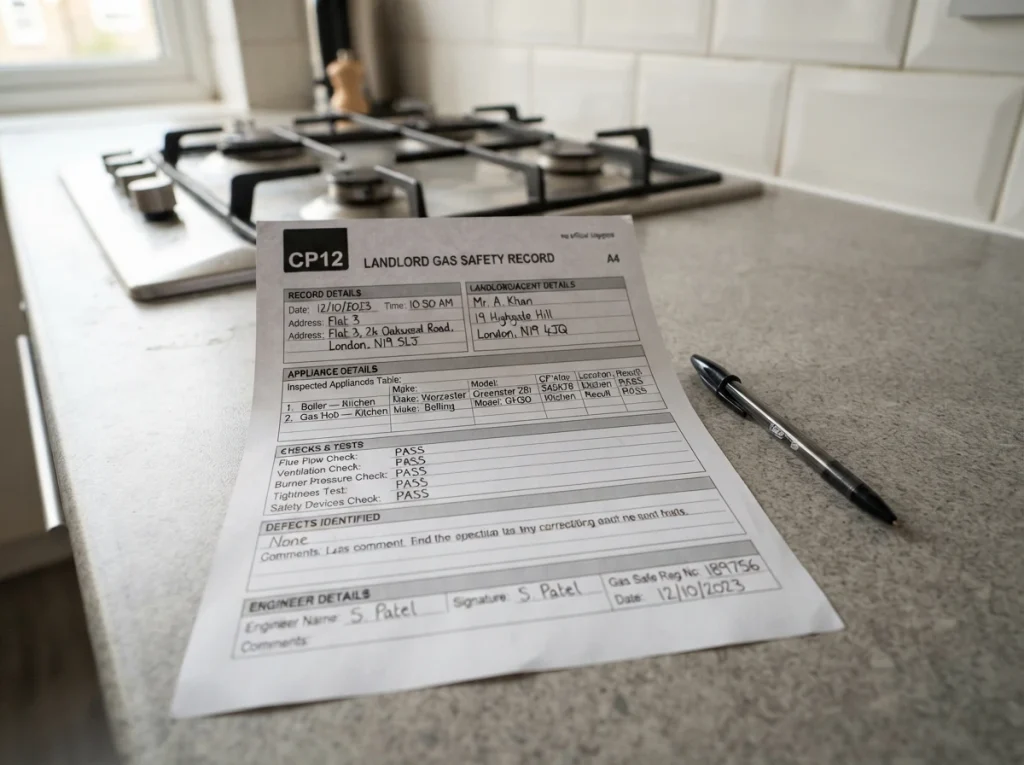
A gas safety certificate is the written record produced after an annual gas safety check on a rented property. It lists every gas appliance and flue inspected, the results of each test, any defects found and the action taken, plus the engineer’s name, signature and Gas Safe registration number.
It isn’t a pass or fail document in the way an MOT is. It’s a statutory record of what the engineer found on the day, and it proves you’ve met your legal duty as a landlord.
Why It’s Called a CP12
The name CP12 stands for “CORGI Proforma 12”, the form number used when CORGI was the official gas registration body. The Gas Safe Register replaced CORGI in April 2009, but the old name stuck.
Today you’ll hear several names for the same document:
- Gas safety certificate
- Landlord gas safety certificate
- Landlord Gas Safety Record (LGSR)
- CP12 certificate
- Gas safety record
They all refer to the same thing. The legal term used by the HSE (Health and Safety Executive) is “gas safety record”.
The Law Behind the Landlord Gas Safety Certificate
(For Illustration Purposes Only)
The landlord gas safety certificate is required by Regulation 36 of the Gas Safety (Installation and Use) Regulations 1998. It requires landlords to keep gas fittings and flues in a safe condition, arrange an annual gas safety check, keep records and share them with tenants.
The HSE enforces these rules and publishes Approved Code of Practice L56, which explains how the regulations work in practice. Local councils can also act under the Housing Act 2004, where gas hazards fall within the Housing Health and Safety Rating System.
Here’s what the law actually requires:
| Requirement | What the Law Says |
|---|---|
| Legislation | Gas Safety (Installation and Use) Regulations 1998, Regulation 36 |
| Check frequency | Every 12 months |
| Who carries out the check | A Gas Safe registered engineer |
| Copy to existing tenants | Within 28 days of the check |
| Copy to new tenants | Before they move in |
| Record retention | At least two years |
| Maximum penalty | Unlimited fine and up to two years imprisonment |
| Enforcing body | HSE, with local authority powers under the Housing Act 2004 |
Your Duties Under Regulation 36
As a landlord, you must:
- Maintain all gas pipework, appliances and flues you provide in a safe condition
- Arrange a gas safety check on each appliance and flue every 12 months
- Use a Gas Safe registered engineer for every check and repair
- Give tenants a copy of the gas safety record at the right time
- Keep each record for at least two years
The Two-Month Renewal Window
Since April 2018, you can carry out the annual gas safety check up to two months before the deadline and keep the original expiry date. So if your certificate expires on 1 December, a check done on 5 October still gives you a renewal date of 1 December next year.
This stops landlords losing months off the cycle every time they book early. If you use this flexibility, keep the record until two further checks have taken place.
Who Needs a Gas Safety Certificate?
(For Illustration Purposes Only)
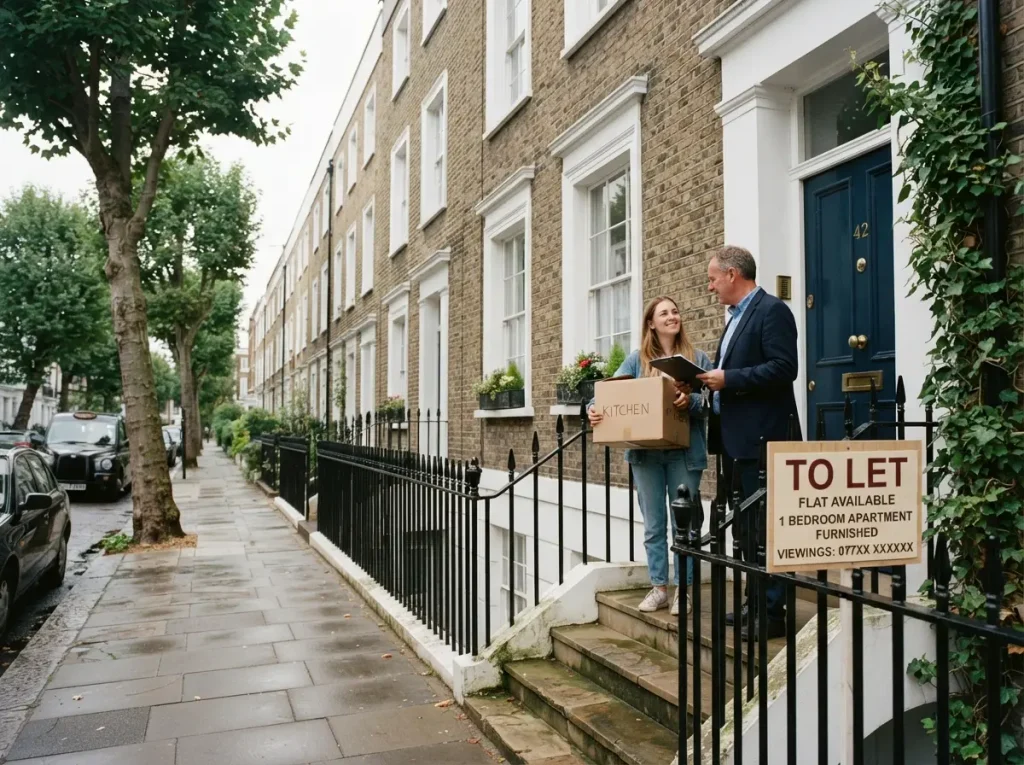
Any landlord letting a residential property with gas appliances, fittings or flues needs a gas safety certificate. This covers most rental arrangements, from single flats on an assured shorthold tenancy to shared houses and holiday lets.
The duty applies to:
- Private landlords letting houses, flats and maisonettes
- HMO landlords, who must also cover appliances in communal areas
- Student lets and bedsits
- Holiday lets and short-term rentals
- Housing associations and local authority landlords
- Landlords letting rooms to lodgers
For short lets under 28 days, you can display the record in a prominent place in the property instead of handing each guest a copy.
What About Letting Agents?
A letting agent can take on responsibility for the gas safety check if the management agreement clearly says so. Without that written arrangement, the legal duty stays with you as the landlord.
Even with an agent in place, it’s worth checking the renewal date yourself. When a certificate lapses, prosecutors look at who held the duty, and “I thought the agent had it” rarely works as a defence.
Do Homeowners Need a Gas Safety Certificate?
No. Owner-occupiers have no legal requirement to get a gas safety certificate, although an annual boiler service and gas appliance check is still sensible for your own safety.
What Does a Gas Safety Check Involve?
(For Illustration Purposes Only)
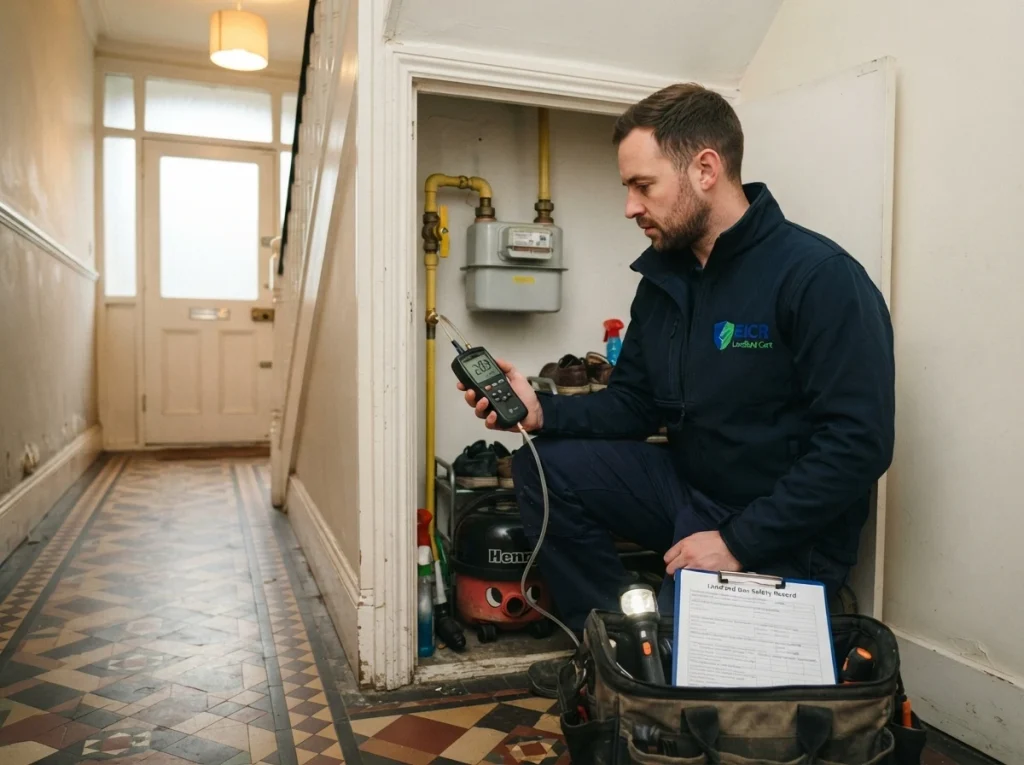
A gas safety check is a hands-on inspection of every gas appliance, flue and piece of pipework the landlord provides. The engineer tests that each appliance burns correctly, that fumes escape safely and that there are no gas leaks, then records the results on the gas safety record.
For a typical flat with a boiler and a gas hob, the gas safety inspection usually takes 30 to 60 minutes. Larger properties or HMOs with several appliances take longer.
During the check, a Gas Safe registered engineer will typically:
- Carry out a tightness test on the installation to check for gas leaks
- Check the operating pressure or heat input of each appliance
- Test the flue for correct flow and signs of spillage
- Confirm there is enough ventilation for safe combustion
- Check that safety devices, such as flame failure devices, work properly
- Look for visible signs of wear, damage or unsafe installation
- Check the gas meter area and accessible pipework
Appliances Covered by the Check
Not every gas appliance in the property falls under your duty. The table below shows what the landlord is responsible for.
| Covered by the Landlord’s Check | Not the Landlord’s Responsibility |
|---|---|
| Gas boiler and central heating system | Appliances the tenant owns and brought in |
| Gas cooker and gas hob | Flues serving only a tenant-owned appliance |
| Gas fire | Appliances the tenant is entitled to remove from the property |
| Gas water heater | Portable gas heaters the tenant bought |
| Flues and chimneys serving landlord appliances | |
| Installation pipework |
You still have to maintain the pipework that feeds a tenant’s own appliance, even though the appliance itself isn’t yours to check.
What a Gas Safety Certificate Includes
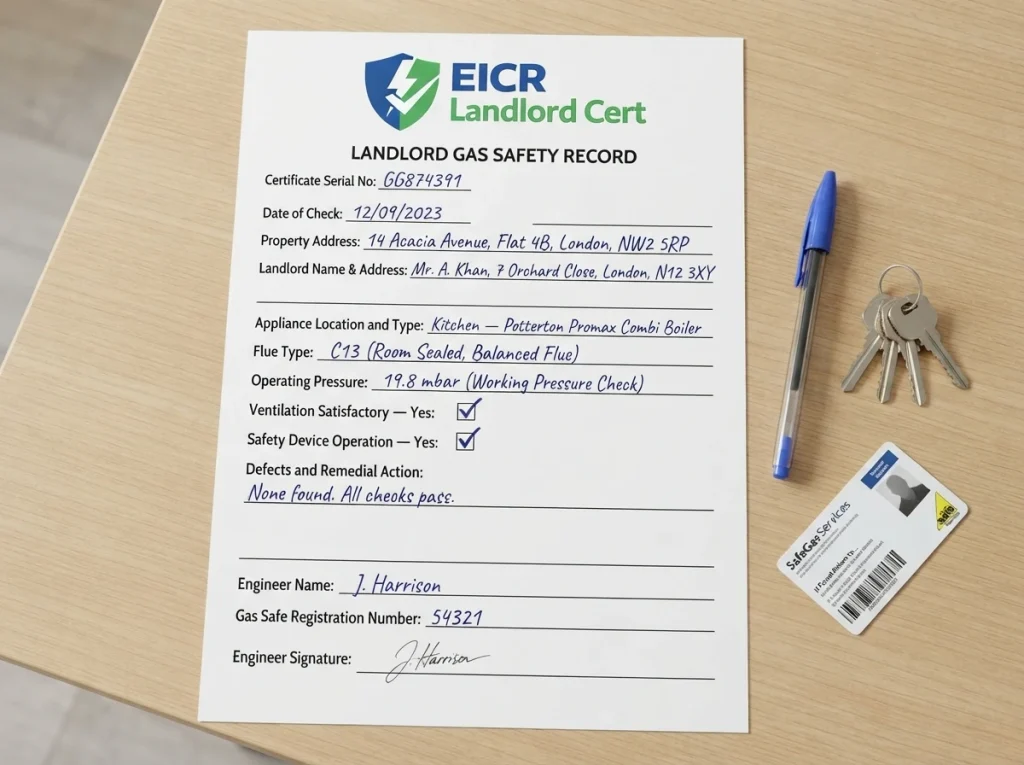
(For Illustration Purposes Only)
A gas safety certificate must include specific details set out in Regulation 36. If any of these are missing, the record may not meet your legal duty, so check it over when you receive it.
A valid Landlord Gas Safety Record shows:
- The date of the check
- The address of the property
- The name and address of the landlord or managing agent
- A description and location of every appliance and flue checked
- Any defect found and the remedial action taken
- Confirmation that the flue, ventilation, operating pressure or heat input, and safe operation were all checked
- The engineer’s name and signature
- The engineer’s Gas Safe registration number
Always check the engineer’s Gas Safe ID card before work starts. The card shows the types of gas work they’re qualified for, and you can confirm their registration number on the Gas Safe Register website.
What Happens if an Appliance Fails the Check?
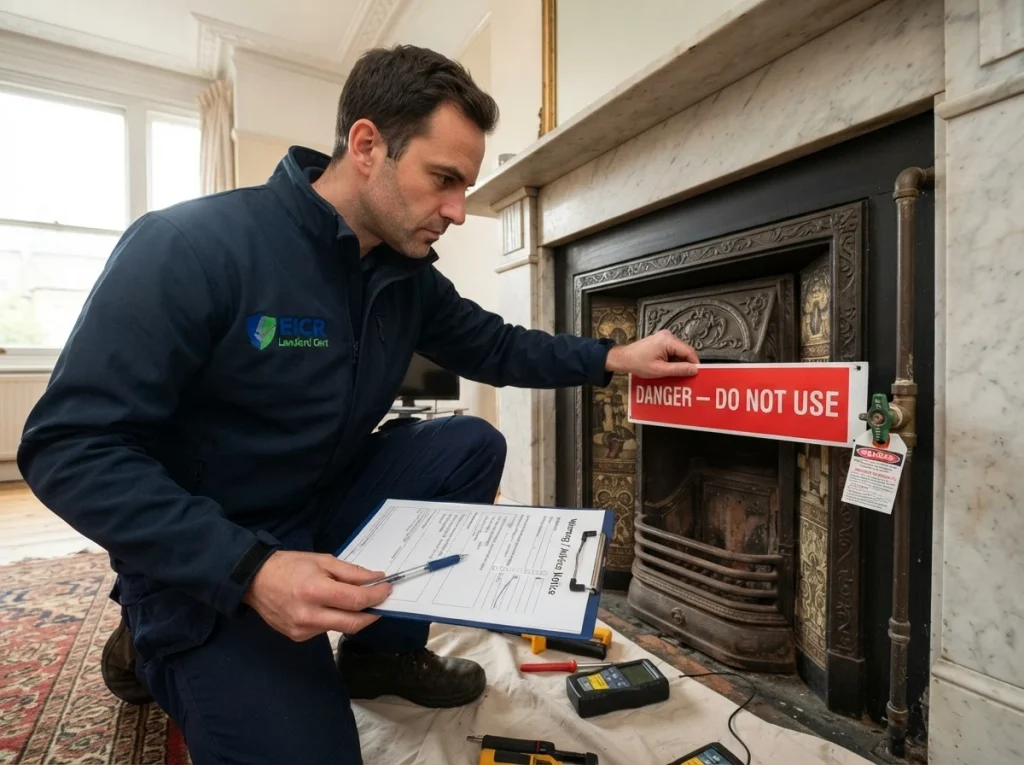
(For Illustration Purposes Only)
When an engineer finds a fault, they classify it using the Gas Industry Unsafe Situations Procedure published by IGEM (the Institution of Gas Engineers and Managers). The classification decides what happens next and how quickly you need to act.
| Classification | What It Means | Typical Action |
|---|---|---|
| Immediately Dangerous (ID) | The appliance poses a live risk to life or property | Disconnected on the spot with permission, and labelled “Do Not Use” |
| At Risk (AR) | One or more faults could become dangerous | Turned off with permission and labelled until repaired |
| Not to Current Standards (NCS) | Installed to older standards but not currently unsafe | Recorded on the certificate, with upgrading advised |
If someone refuses permission to make an Immediately Dangerous appliance safe, the engineer can contact the gas emergency service, which has powers to disconnect the supply.
Condemned Appliances and Your Next Steps
A condemned appliance must not be used until a Gas Safe registered engineer repairs or replaces it. For a boiler in winter, that means moving quickly, as tenants left without heating or hot water can raise complaints with the council.
Once the repair is done, ask the engineer to record it so your paperwork matches the current state of the property.
Carbon Monoxide Alarms
In England, the Smoke and Carbon Monoxide Alarm (Amendment) Regulations 2022 require a carbon monoxide alarm in any room with a fixed combustion appliance, excluding gas cookers. Many engineers test these alarms during the gas safety inspection, although the alarm rules are a separate legal duty.
When Tenants Won’t Give Access
If a tenant refuses access for the gas safety check, the law expects you to take “all reasonable steps” to complete it. You won’t automatically be blamed for a missed check, but you must show you tried properly.
In practice, reasonable steps usually mean:
- Giving at least 24 hours’ written notice of the appointment
- Offering alternative dates and times
- Making several attempts, often three, over a period of weeks
- Keeping copies of every letter, email and text message
Never force entry. Keep a clear paper trail instead, as that record is your protection if the HSE or council asks questions later. A simple log showing the date, time and method of each attempt makes that evidence much stronger.
Penalties for Not Having a Gas Safety Certificate
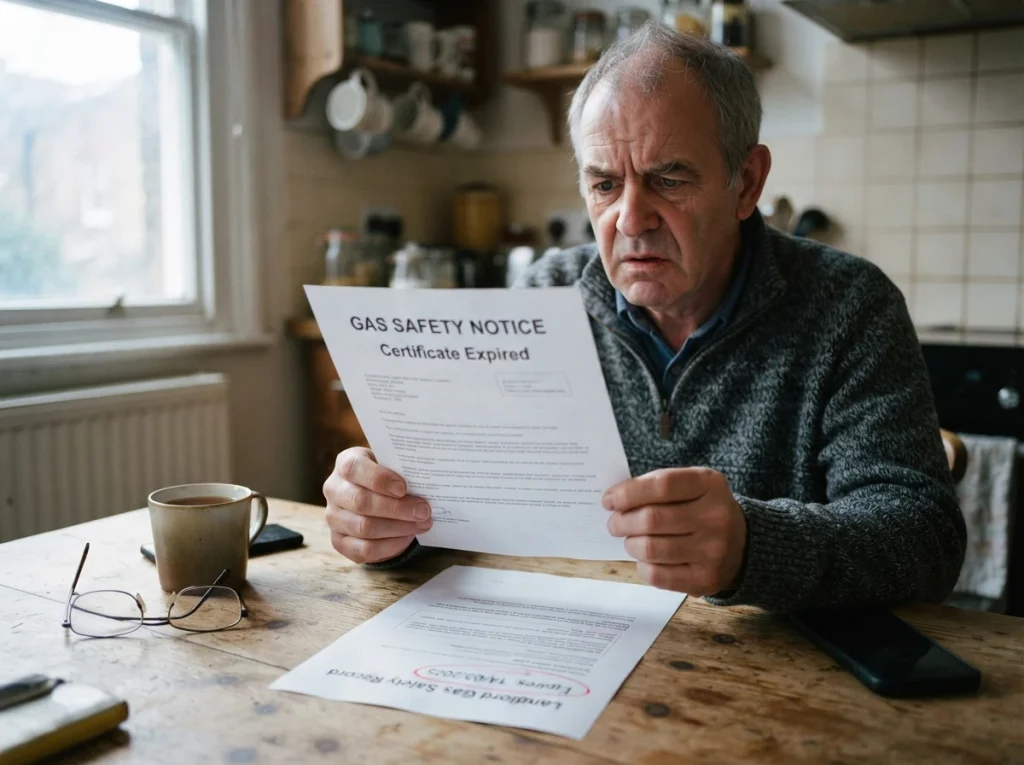
(For Illustration Purposes Only)
Failing to hold a valid gas safety certificate is a criminal offence under the Gas Safety (Installation and Use) Regulations 1998. The courts can impose an unlimited fine and up to two years in prison, and serious cases involving injury can lead to manslaughter charges.
Beyond prosecution, a missing CP12 can create other problems. Your landlord insurance may be affected, councils can take enforcement action under the Housing Act 2004, and your reputation with tenants and agents takes a hit.
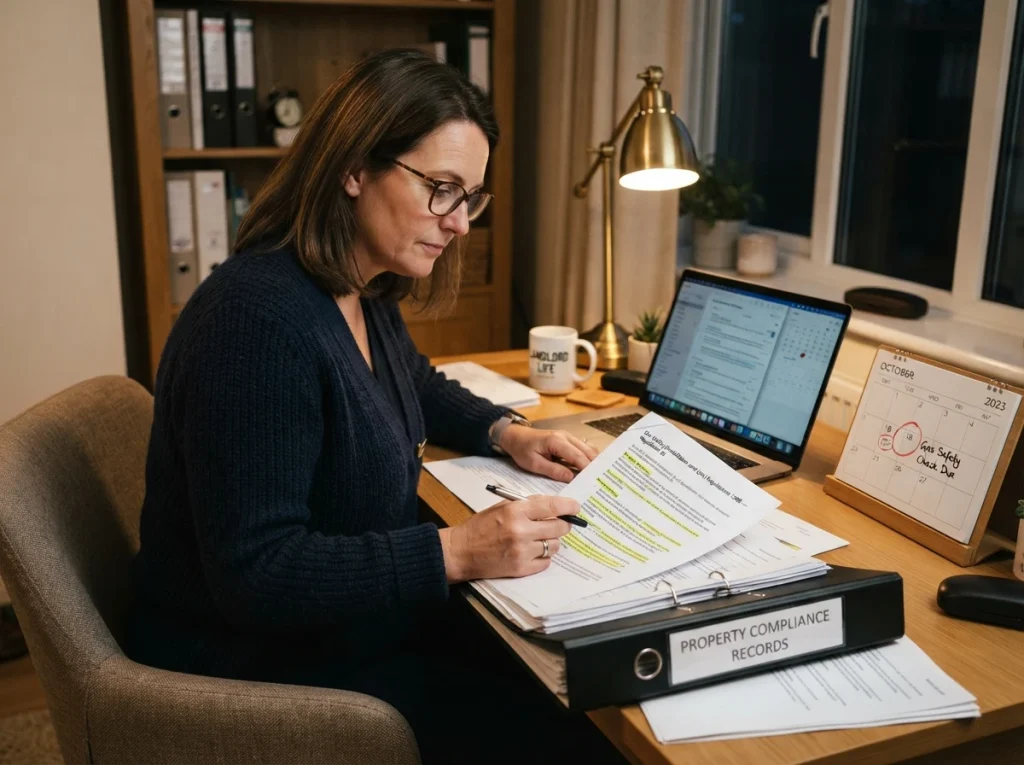
The fix is simple. Put the expiry date in your diary, book the check within the two-month window, and file each record where you can find it.
Key Takeaways on Gas Safety Certificates
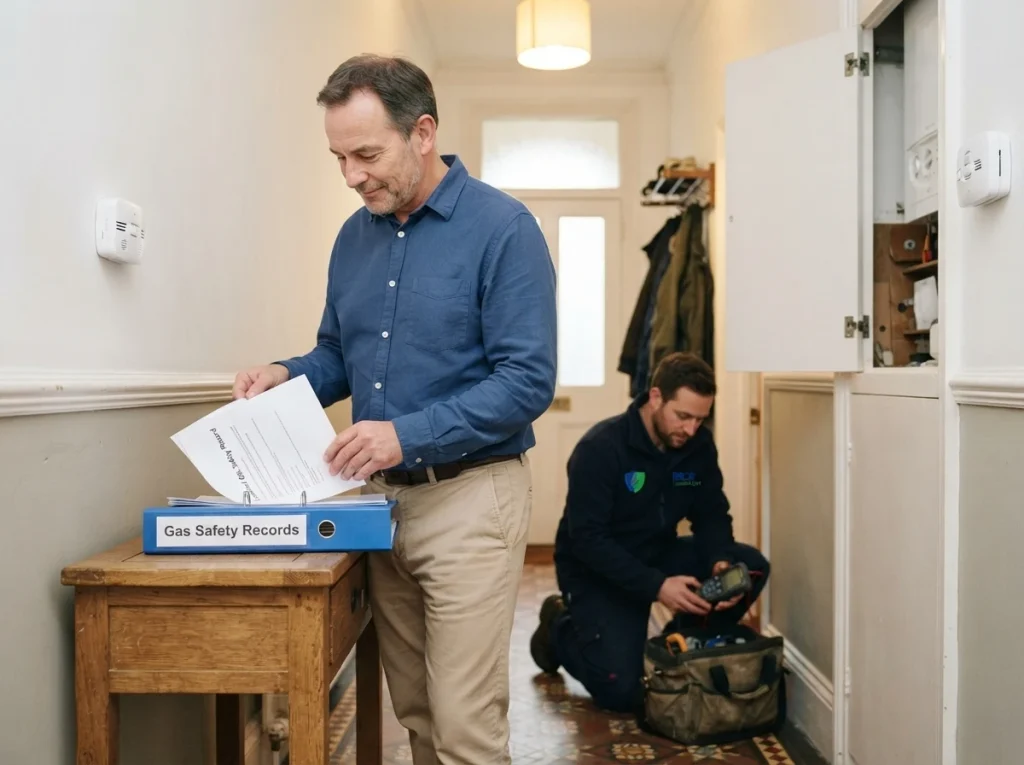
(For Illustration Purposes Only)
So, what is a gas safety certificate in plain terms? It’s your annual proof that a Gas Safe registered engineer has checked the gas appliances, pipework and flues in your rental property and found them safe, or recorded what needs fixing.
You need a new one every 12 months, tenants need a copy within 28 days, and you must keep each record for two years. Get those three things right and you’ve met the core of Regulation 36.
Remember that the duty covers landlord-owned appliances, pipework and flues, and every check must be done by a Gas Safe registered engineer. If an appliance is classed as Immediately Dangerous or At Risk, arrange the repair before anyone uses it again.
Booking a Gas Safety Certificate With EICR Landlord Cert Ltd
EICR Landlord Cert Ltd carries out landlord gas safety checks across all 32 London boroughs from our base at 128 City Road, London, EC1V 2NX. Our engineers are Gas Safe registered, DBS checked and covered by public liability insurance, and gas safety certificates start from £75. We offer same-day inspections where availability allows, and we can arrange tenant access directly with your letting agent. Call us on 0203 633 9146, Monday to Friday, 9:00 AM to 6:00 PM.
Frequently Asked Questions
How long is a gas safety certificate valid?
A gas safety certificate is valid for 12 months from the date of the check. Landlords must arrange a new gas safety check before the expiry date under the Gas Safety (Installation and Use) Regulations 1998.
Since April 2018, you can carry out the check up to two months early and keep the original renewal date, so booking ahead doesn’t shorten your cycle, and you must keep every record for at least two years.
What is a CP12 certificate?
A CP12 certificate is another name for the Landlord Gas Safety Record. CP12 stands for “CORGI Proforma 12”, the form used when CORGI was the official gas registration body before the Gas Safe Register took over in April 2009.
The document confirms that a Gas Safe registered engineer has checked all landlord-owned gas appliances, pipework and flues in a rented property within the last 12 months.
Can a landlord do their own gas safety check?
No, unless the landlord is personally a Gas Safe registered engineer qualified for the appliances in the property. Regulation 36 of the Gas Safety (Installation and Use) Regulations 1998 requires the annual check to be done by someone on the Gas Safe Register.
A landlord who carries out their own check without registration commits an offence, and the resulting record would not be legally valid.
Does a gas safety certificate include a boiler service?
No, a gas safety check confirms that the boiler and other gas appliances are safe to use, but it doesn’t include cleaning, part replacement or efficiency adjustments. A boiler service is a separate maintenance job.
There’s no specific legal requirement for an annual boiler service, but landlords must keep appliances in a safe condition, and many book both at the same visit.
How much does a gas safety certificate cost?
The cost depends on the number of gas appliances in the property, as each boiler, cooker, hob and gas fire needs checking. Properties with more appliances, such as HMOs, take longer and cost more.
At EICR Landlord Cert Ltd, gas safety checks start from £75 and are carried out by Gas Safe registered engineers, and you can call 0203 633 9146 for a quote.
What happens if a landlord has no gas safety certificate?
Letting a property without a valid gas safety certificate is a criminal offence under the Gas Safety (Installation and Use) Regulations 1998. The HSE can prosecute, and courts can impose an unlimited fine and up to two years in prison.
Local councils can also take enforcement action under the Housing Act 2004, and cases where tenants are harmed by carbon monoxide can lead to manslaughter charges.
Who can issue a CP12 certificate?
Only a Gas Safe registered engineer can issue a CP12 certificate. The engineer must be qualified for the specific types of appliance in the property, which are listed on the back of their Gas Safe ID card.
Before any work starts, check the card and confirm the registration number on the Gas Safe Register website, as a record signed by an unregistered person has no legal standing.
Do I need a gas safety certificate if my rental has no gas?
No, if the property has no gas supply, appliances, pipework or flues, there is nothing to check and no gas safety certificate is needed.
However, if a gas supply is capped but pipework remains, ask a Gas Safe registered engineer to confirm the installation is fully disconnected. Keep written confirmation on file so you can show why no annual gas safety check was required.